

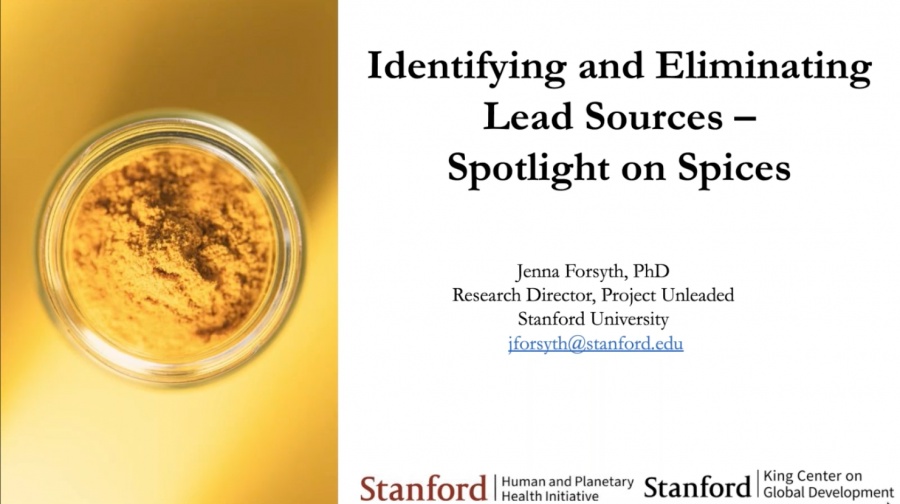
Lead is a potent neurotoxin and poses a serious threat to public health and human intellectual capital worldwide. While no levels of lead exposure are considered safe for humans, lead is particularly detrimental to cognitive development among children and to cardiovascular health among adults. Decades of research have focused on assessing the adverse impacts of lead exposure globally, but a pressing question remains: where is the lead coming from?
Stanford University’s Lead Initiative has used an interdisciplinary approach to identify and address sources of exposure. Their work to identify turmeric as a source of lead poisoning in Bangladesh, and subsequent collaborative efforts to get lead out of turmeric, have been highlighted by numerous media outlets, including The Economist, and by USAID Administrator Samantha Power at the World Economic Forum.
In this free webinar, research scientist Jenna Forsyth, PhD, will provide an overview of this effort and the ongoing research aided by portable X-ray fluorescence (pXRF) analyzers for rapid lead screening.

